

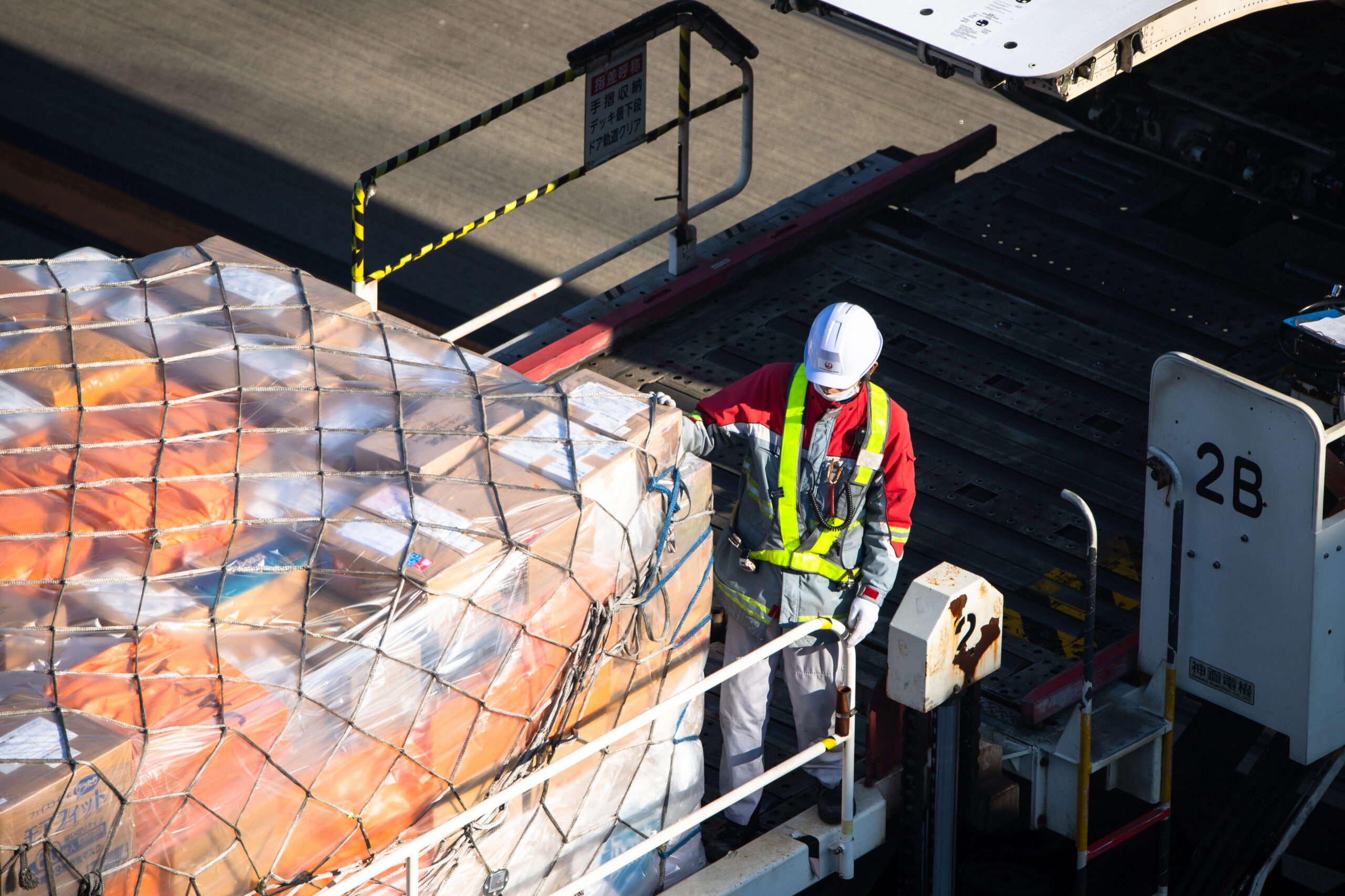
Rising demand from the United States for high-tech and artificial intelligence–related products manufactured in Southeast Asia is putting pressure on air cargo capacity within Asia. Much of the freight bound for North America continues to move through regional hub airports, according to industry analysis.
Freight forwarders report that congestion is already increasing at key airports as the Lunar New Year peak approaches. Kathy Liu of Dimerco Express Group said that the shift toward “China-plus-one” manufacturing—accelerated by US tariff policies—has significantly increased intra-Asia cargo flows. As a result, capacity is becoming tighter at major hubs such as Hong Kong, Taipei, Singapore, Incheon, and Narita.
Capacity Constraints and E-Commerce Headwinds
While there has been some expansion in direct air cargo services between Southeast Asia and North America, a large share of shipments still relies on transshipment hubs. Total bellyhold capacity is expected to remain broadly unchanged in 2025 due to delays in aircraft deliveries from both Boeing and Airbus. In addition, the recent grounding of around 70 MD-11 and DC-10 freighter aircraft has further reduced available cargo space.
Niall van de Wouw of Xeneta noted that investment linked to artificial intelligence supported air freight demand through 2025. However, he cautioned that signs of weakening are emerging in China’s e-commerce sector. Cross-border shipment volumes from China were largely flat in October and November, with exports to the US falling by more than 50 percent year on year, even as volumes to the European Union continued to rise.
Copyright 2025 HKSG Group Media Ltd